




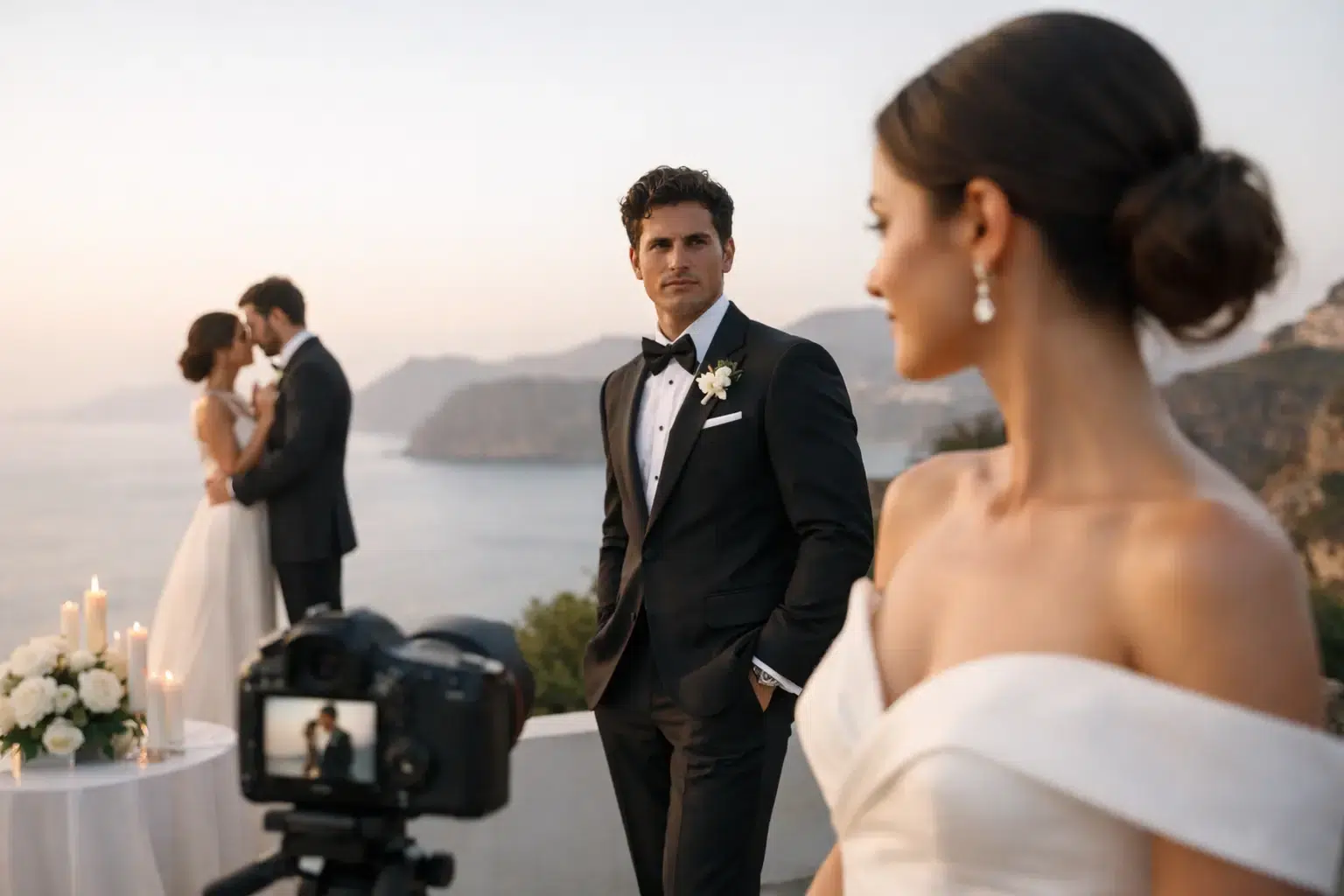
A wedding can be impeccably designed and still feel incomplete in photographs if the imagery does not reflect the spirit beneath the surface. The best editorial wedding photography styles do more than honor beautiful details. They hold the anticipation before the ceremony, the quiet recognition across the aisle, and the atmosphere your guests felt long after the final toast.
For couples planning a considered celebration, editorial photography is often the natural choice. Its appeal lies in its polish, but its lasting power comes from something more personal: photographs that feel composed without feeling manufactured. The right style should make room for both the architecture of the day and the humanity within it.
What Makes Wedding Photography Feel Editorial?
Editorial wedding photography borrows its visual language from fashion, art, and luxury print publications. It values considered composition, beautiful light, intentional direction, and a strong sense of place. A carefully chosen gown, an architectural ceremony space, or a table set for an intimate dinner is photographed with the same attention given to a meaningful portrait.
Yet editorial need not mean distant or overly posed. The most resonant work balances refinement with reality. It gives a couple gentle direction when a portrait deserves shape and space, then steps back when a parent reaches for a hand or the room erupts in laughter. That balance is what keeps photographs from becoming a record of styling alone.
The distinction matters because a wedding album is not simply proof of what was worn or where dinner was served. It becomes part of a family’s visual history. Trends may influence a celebration, but the photographs should retain their emotional clarity decades from now.
The Best Editorial Wedding Photography Styles for a Lasting Legacy
Fashion-Forward Editorial Portraiture
Fashion-forward portraiture is perhaps the style most people picture when they imagine editorial wedding photography. It is defined by elegant posing, deliberate use of line and movement, and a confident awareness of wardrobe, setting, and light. A bride framed in the doorway of a villa, a couple walking through a grand hotel lobby, or a groom adjusting his cufflinks before the ceremony can all feel cinematic without becoming theatrical.
This approach is particularly fitting for couples who have invested in distinctive attire, a remarkable venue, or a design concept with a strong visual point of view. It allows those choices to be seen at their full value. The trade-off is time: striking portraits require a thoughtfully protected window in the wedding-day schedule. With an experienced photographer and a well-paced plan, that time feels calm rather than performative.
Documentary Editorial Storytelling
Documentary editorial storytelling places unscripted emotion inside a highly observant visual frame. Rather than arranging every moment, the photographer looks for the gestures that reveal the day’s true character: a grandmother watching the ceremony from the first row, friends gathering around the couple before dinner, a veil lifted by an unexpected breeze.
The editorial quality comes through composition, timing, and sensitivity to atmosphere. These images feel immediate, but never accidental. They preserve the energy of a full dance floor and the stillness of a private exchange with equal care.
For couples who want their gallery to feel alive, this is essential. It protects the parts of the celebration they cannot fully see while they are living them. Still, documentary coverage is strongest when it is paired with intentional portraiture. Candid images tell the story of the room; portraits give the story its enduring focal point.
Fine-Art Romanticism
Fine-art editorial photography favors softness, luminous light, and a sense of restraint. It often feels romantic and tactile, with an emphasis on natural skin tones, graceful movement, and details that appear almost painterly. Think of sunlight filtering through an estate garden, a silk ribbon resting against a handwritten note, or a first dance photographed in a wash of warm candlelight.
This style suits celebrations built around romance, natural beauty, and thoughtful craftsmanship. Garden weddings, coastal weekends, historic estates, and intimate destination gatherings often provide a beautiful setting for it. The goal is not to make the day look faded or overly sweet, but to create images with gentleness and depth.
When considering fine-art work, look beyond a single sunlit portrait. Review how the photographer handles mixed lighting, interiors, and evening celebrations. A complete body of work should feel cohesive from morning preparations through the last dance.
Architectural and Design-Led Imagery
Some celebrations are defined by their setting. A modern museum, European chateau, private residence, or destination resort can shape the visual language of the entire weekend. Architectural editorial photography honors that sense of place, using symmetry, scale, negative space, and perspective to make the environment part of the story.
This style is especially compelling when a couple wants to remember not only who attended, but how the celebration felt to enter. The ceremony’s proportions, the view from the reception terrace, and the quiet beauty of a perfectly prepared room all deserve to be documented.
There is a nuance here. Design-led imagery should never reduce people to accessories within a room. The strongest photographs use the setting to amplify connection. A couple may appear small beneath a soaring ceiling, but the image should still feel intimate because their attention is entirely on one another.
Cinematic Black-and-White Photography
Black-and-white images bring a particular kind of permanence to a wedding gallery. Without color, attention moves to expression, gesture, contrast, and light. A father seeing his child dressed for the ceremony, a tearful embrace after vows, or the exhilaration of a late-night dance can feel especially powerful in monochrome.
This is not a separate style that must define the entire collection. For most couples, black-and-white works best as a considered layer within a color gallery. It creates visual rhythm and gives emotionally charged images room to breathe.
The key is discernment. Not every photograph benefits from being converted to black and white, particularly when the palette, floral design, or destination landscape is central to the memory. Used selectively, it feels timeless rather than nostalgic by default.
Choosing an Editorial Style That Still Feels Like You
The most beautiful style is not always the one that photographs well on a mood board. It is the one that reflects how you want to remember the day. If you value stillness, artistry, and a strong sense of place, fashion-forward or architectural imagery may feel especially true. If your priority is the feeling of being surrounded by the people you love, documentary editorial coverage may matter most.
Many couples discover that they do not need to choose only one approach. A layered collection often offers the greatest emotional range: polished portraits that could live in print, candid images full of movement, and quiet detail photographs that return you to the texture of the day. This is where a photographer’s point of view matters more than a label.
As you review portfolios, notice whether the work feels consistent across locations, weather conditions, and cultural traditions. Look for photographs of real connection, not only impeccable tablescapes. Ask yourself whether the people in the images appear at ease. Editorial imagery should feel elevated, but it should never ask you to become someone else for the camera.
Creating Space for Meaningful Photographs
The photography experience begins well before the wedding day. A generous timeline, thoughtful consideration of light, and a portrait location that feels aligned with your celebration can transform the final gallery. These decisions are not about controlling every moment. They create room to be present while the photographs are made with intention.
The best approach is collaborative. Share what matters most: the people whose reactions you hope to preserve, the heirlooms you want remembered, the feeling you want guests to carry home. Then allow your photographer the trust and freedom to recognize the moments you could not have planned.
At Adebiyi Studios, the aim is never to choose between editorial beauty and honest emotion. It is to preserve both, so the photographs feel as exquisite as the celebration and as personal as the promises made within it.
When you look back years from now, the most meaningful images may not be the ones you expected. They may be the quiet frame between events, the hand held beneath the table, or the expression that appeared just before the music began. Choose a style that leaves room for those moments. That is where a wedding story becomes a legacy.
Comments are closed