




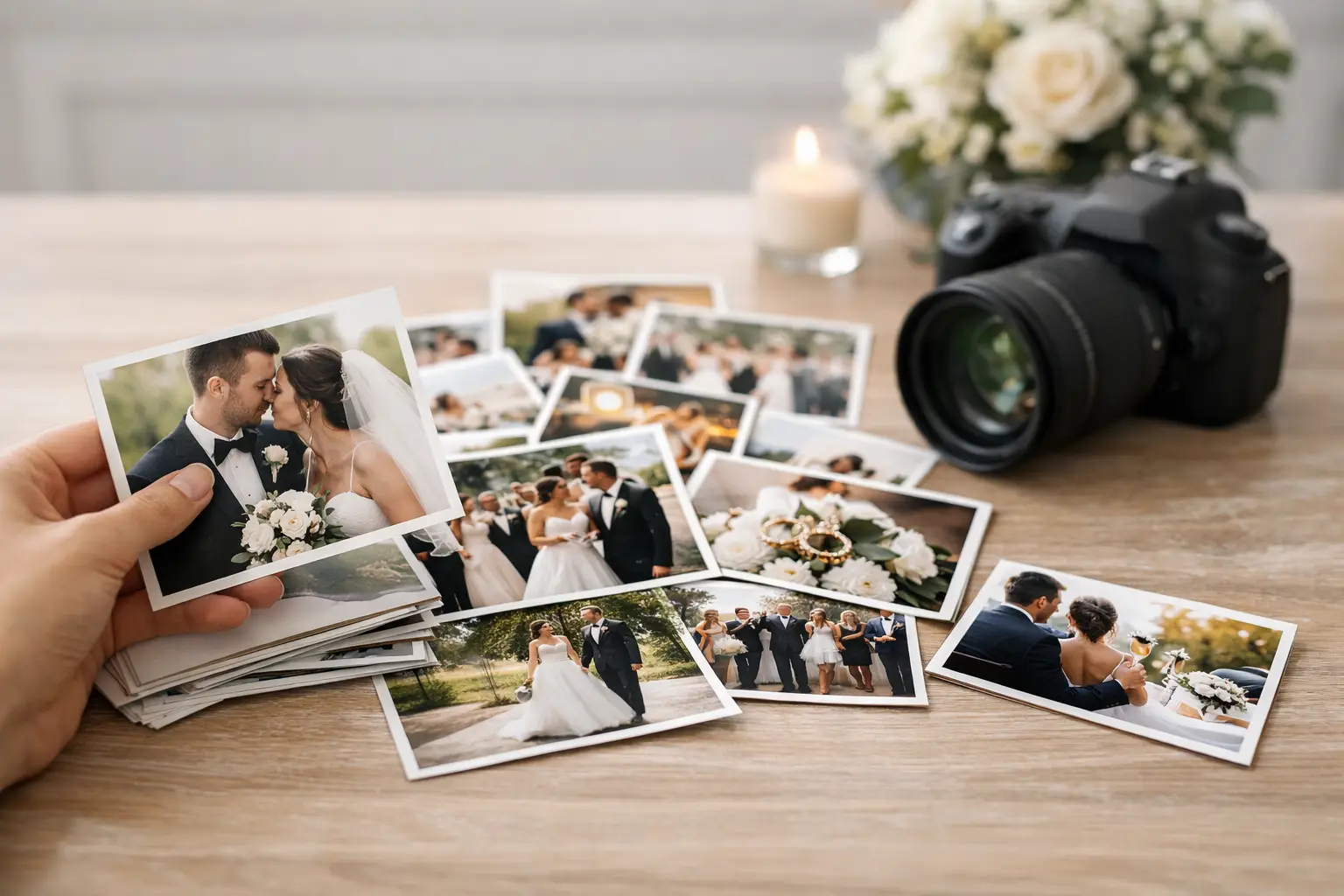
How many wedding photos delivered are enough to hold a wedding day in full? It is a thoughtful question, especially when every decision has been made with intention: the ceremony setting, the floral compositions, the people gathered from near and far, and the quiet moments that exist only once. The right answer is not a single number. It is a gallery that lets you return to the feeling of the day without asking you to search for what mattered.
For most couples, photography is not simply a record of the schedule. It becomes the visual legacy of a beginning, preserving the elegance of the celebration and the emotional texture beneath it. A meaningful final gallery should feel complete, considered, and deeply personal rather than excessive for its own sake.
How Many Wedding Photos Are Typically Delivered?
A thoughtfully photographed full wedding day often results in approximately 600 to 1,000 finished images. This range is a useful starting point, but it should never be treated as a promise detached from the celebration itself. A six-hour city wedding with an intimate guest list may naturally yield fewer final photographs than a twelve-hour estate celebration with a rehearsal dinner, cultural traditions, multiple locations, and a grand evening reception.
The number of images is shaped by the rhythm of the day. More coverage hours create more opportunities for meaningful photographs, but time alone is not the whole story. A ceremony rich with family participation, a lively dance floor, a fashion-forward wedding party, or a destination weekend with several events may warrant a broader visual record.
For a standard wedding day, couples might expect a gallery to include getting-ready moments, details, portraits, the ceremony, family formals, cocktail hour, reception events, guest candids, and the atmosphere that connects them all. With multi-day destination celebrations, the final collection can be more expansive because the story itself has more chapters.
A Larger Gallery Is Not Always a Better Gallery
There is understandable comfort in a high image count. It can seem like proof that nothing was missed. Yet a gallery of thousands of near-identical frames can dilute the impact of the moments you most want to remember.
Refined wedding photography requires discernment. The work is not merely to make photographs throughout the day, but to select the strongest expressions, gestures, and compositions from what has been observed. The glance between partners before the ceremony, a parent steadying their emotions, the sweep of a reception room before guests enter, and the spontaneous joy of a crowded dance floor each deserve room to resonate.
That does not mean a final gallery should feel sparse. It means it should feel edited with care. You should see the full story, including the in-between moments that give a wedding its humanity, without receiving ten versions of the same toast or every expression captured during a single formal portrait.
The finest galleries balance abundance with restraint. They provide enough imagery to revisit the experience from many angles while preserving a sense of intention in every final selection.
What Shapes Your Final Image Count?
Several details influence how many photographs are delivered after a wedding. Coverage length is the most obvious factor. A photographer present from the final moments of preparation through a full reception exit will document far more than one arriving shortly before the ceremony.
The scale and structure of the celebration matter as well. A 40-person dinner party moves differently from a 300-guest ballroom reception. Larger gatherings often bring more interactions, more family groupings, and more energy unfolding simultaneously. An additional photographer can be especially valuable when a wedding has separate preparation locations, a large guest count, or a reception designed around immersive experiences.
The timeline also has an effect. A calm, generously planned portrait window allows for a richer collection of editorial images and unhurried candid moments. A tightly compressed schedule can still be beautifully documented, but it naturally offers fewer opportunities for variety. The goal is not to turn your day into a production. It is to create enough space for presence, beauty, and genuine connection.
Destination and cultural celebrations often carry additional layers. Welcome gatherings, tea ceremonies, religious traditions, heirloom attire, and farewell brunches are not peripheral events. They are part of the story. When these moments matter to you, they deserve to be included in the photography plan rather than treated as an afterthought.
The Images You Should Never Have to Ask For
A complete wedding gallery should extend beyond the expected portraits and major milestones. The photographs that become most precious over time are often the ones you did not know to request.
You may treasure the anticipation in the bridal suite before the dress is fastened, the way your grandparents watched the ceremony, or the expression on a friend’s face during a speech. You may want to remember the design choices you spent months refining: the paper suite, the ceremony flowers in changing light, the place settings before the room filled with conversation. These photographs establish the world of the day.
Just as essential are the moments that cannot be arranged. Hands reaching across a table. A child asleep on a loved one’s shoulder. Your partner laughing with abandon during the reception. The energy of guests surrounding you on the dance floor. Documentary images give the polished portraits their pulse, revealing how the celebration truly felt from within.
This is why image count should be considered alongside photographic approach. A gallery can contain hundreds of technically beautiful images and still feel incomplete if it has not captured the relationships, atmosphere, and emotional transitions that made your wedding distinct.
Ask About Storytelling, Not Just a Number
When speaking with a prospective photographer, it is reasonable to ask for an expected delivery range. It helps you understand their process and compare coverage options. But the more revealing conversation is about how they see a wedding day.
Ask to view complete galleries from celebrations similar in length, scale, and style to your own. Notice whether the gallery carries you from one part of the day to the next with ease. Do family and friends appear with warmth and intention? Are the portraits polished without feeling rigid? Does the reception feel as alive on screen as it likely did in the room?
You may also ask how the photographer approaches editing. A careful edit is not simply color correction. It is the final act of shaping a visual narrative, choosing images that honor both the grandeur of the occasion and its smallest truths. At Adebiyi Studios, that balance is central to the work: editorially composed imagery with the emotional honesty that gives a wedding its lasting meaning.
Plan for the Gallery You Want to Keep
The most effective way to receive a complete collection is to build photography into the architecture of the day. Allow time for details to be photographed before they are worn or enjoyed. Consider a first look if private portraits and more time with guests are priorities. Keep formal family groupings concise and prepared so they remain a meaningful part of the day, not a prolonged interruption.
Most of all, protect moments of stillness. A few unhurried minutes together after the ceremony or a brief pause during sunset can create photographs that feel both cinematic and entirely true to you. These are not performances for the camera. They are opportunities to be present in a day that moves quickly.
The number of final photographs matters because you deserve a record with depth. Yet years from now, you are unlikely to count the images. You will return to the one that recalls your father’s expression, the one that shows the room glowing before dinner, and the one where the two of you look exactly as happy as you felt. Choose a photographer whose eye will recognize those moments while they are still unfolding.
Comments are closed